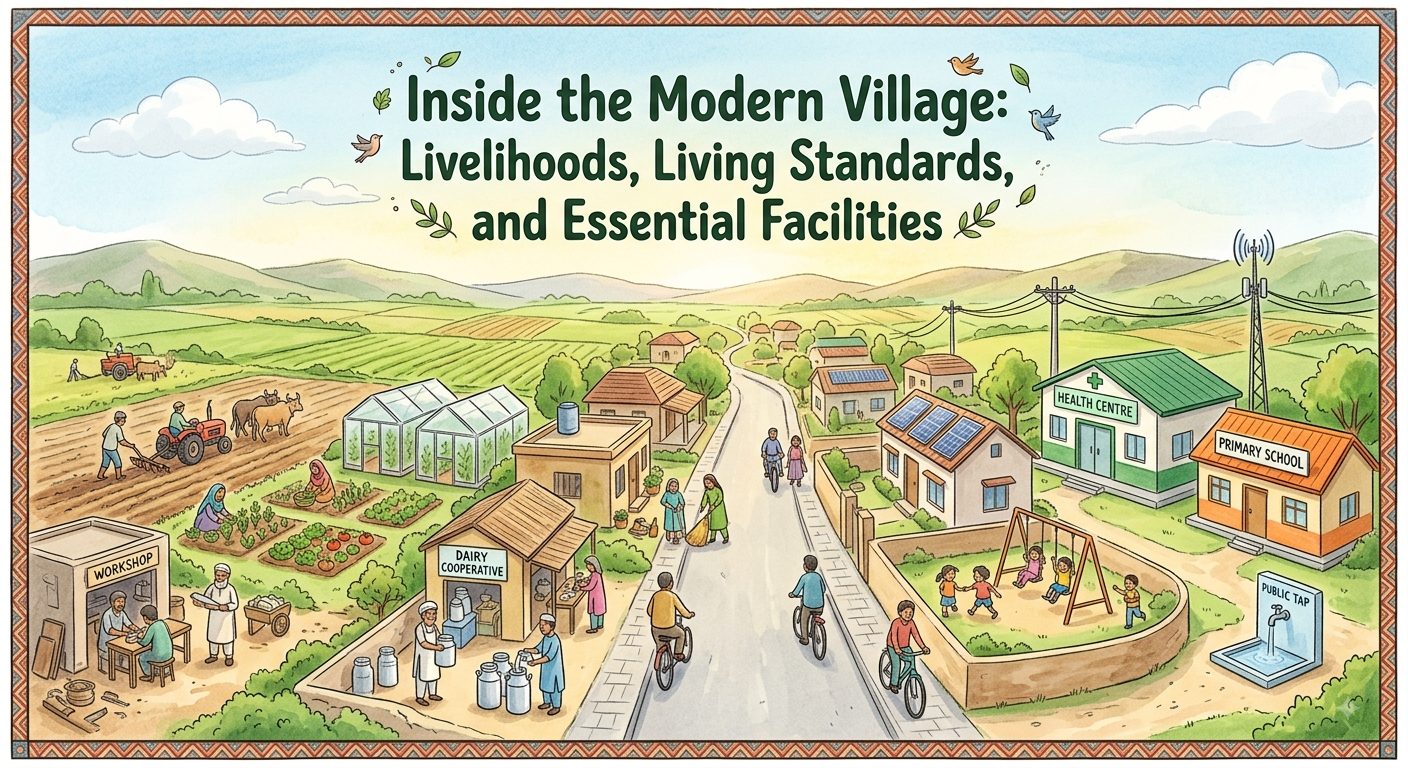
Inside the Modern Village: Livelihoods, Living Standards, and Essential Facilities
Introduction
The concept of the village has long held a distinct place in human civilization. Historically viewed as tranquil, self-sustaining pockets of traditional culture, rural settlements are often romanticized in literature and folklore as timeless sanctuaries untouched by the rapid march of urban progress. However, the contemporary reality of village life is far more dynamic, complex, and resilient. Far from being static relics of the past, modern villages across the globe are undergoing a profound transformation. They sit at the crossroads of deep-seated traditions and rapid modernization, adapting to economic shifts, technological developments, and changing social expectations.
Understanding village life today requires looking beyond nostalgic imagery and examining the lived realities of rural inhabitants. How do villagers earn their living in an increasingly interconnected global economy? What defines their daily standards of living, social structures, and cultural practices? Most importantly, what level of access do they have to essential facilities such as clean water, healthcare, electricity, education, and digital infrastructure? This article provides an exhaustive exploration of modern village life, analyzing its economic foundations, everyday living conditions, infrastructure development, and the unique challenges and opportunities that lie ahead for rural communities.
1. The Economic Engine: How Villagers Earn Their Livelihood
At the heart of any community lies its economic structure. In rural areas, economic activity is intricately tied to the surrounding environment, natural resources, and localized skill sets. While agriculture remains the primary backbone of rural economies worldwide, modern villages have seen significant diversification in their sources of income.
Agricultural Pursuits: Traditional Methods Meets Modern Innovation
For centuries, agriculture has been the dominant force driving rural economies. In many developing and developed nations alike, a substantial portion of the village population continues to rely on farming for both subsistence and commercial enterprise.
- Subsistence and Crop Farming: Smallholder farmers cultivate essential crops tailored to their regional climate—ranging from staple grains like rice, wheat, and maize to cash crops such as tea, coffee, cotton, and sugarcane. Modern farmers increasingly combine traditional crop rotation techniques with contemporary high-yield seeds and organic soil management.
- Livestock Rearing and Dairy Farming: Raising cattle, goats, sheep, and poultry provides both vital nutrition and a reliable daily income. Dairy cooperatives have revolutionized this sector in many regions, allowing small-scale farmers to pool their milk production and gain access to larger urban markets.
- Horticulture and Aquaculture: Diversification into fruit orchards, flower farming, and fish farming (aquaculture) has allowed villagers to maximize yield on smaller plots of land, protecting themselves against the volatility of single-crop market prices.
- Agricultural Mechanization and Smart Practices: The introduction of tractors, automated irrigation pumps, solar-powered machinery, and mobile weather forecasting apps has transformed how farming is conducted, reducing backbreaking manual labor and increasing yield predictability.
Non-Farm Livelihoods and Cottage Industries
As arable land becomes fragmented due to population growth, non-agricultural activities have emerged as vital lifelines for rural households. Cottage industries and micro-enterprises play a pivotal role in absorbing local labor.
- Handicrafts and Artisanal Trades: Villages are often hubs of rich cultural craftsmanship. Handloom weaving, pottery, woodworking, metal forging, and traditional embroidery generate steady income, especially when connected to domestic and international tourism or e-commerce platforms.
- Small-Scale Food Processing: Processing raw agricultural goods locally—such as pressing oilseeds, milling grain, pickling fruits, or drying spices—adds significant value to farm produce before it reaches urban markets.
- Trades and Construction: Carpenters, masons, blacksmiths, electricians, and mechanics provide indispensable services within the village ecosystem, sustaining local infrastructure and residential development.
The Rise of the Rural Gig Economy and Micro-Entrepreneurship
The spread of mobile connectivity and access to microfinance has fostered a new wave of entrepreneurship in rural areas. Small grocery shops (mom-and-pop stores), mobile phone repair outlets, local transport services (such as auto-rickshaws and small freight trucks), and digital service centers (providing banking and printing services) have proliferated. Furthermore, remittance from family members working in urban centers or abroad forms a substantial portion of household income in many rural regions.
2. Everyday Life and Living Standards
Living standards in rural areas are shaped by a delicate balance between community-centric traditional lifestyles and the gradual integration of urban conveniences. While rural living offers unique perks, such as proximity to nature and strong social cohesion, it also presents distinct daily hurdles.
Housing and Architectural Evolution
The physical structure of rural homes has changed dramatically over recent decades. Traditionally, village homes were built primarily using locally sourced materials—clay, mud, thatch, bamboo, and unburnt brick. These kucha (temporary or semi-permanent) houses were ecologically sustainable and naturally insulated but required constant maintenance and were vulnerable to extreme weather.
Today, there is a clear shift toward pucca (permanent) structures constructed with concrete, fired bricks, steel, and tin roofing. While these modern homes offer superior protection against floods, storms, and pests, they sometimes lack the natural ventilation of traditional designs. Many households now maintain a blend of both styles: modern brick living rooms alongside traditional open-air courtyards and detached kitchens.
Dietary Patterns and Household Dynamics
Dietary life in the village is generally characterized by freshness and seasonal consumption. Unlike urban residents who rely heavily on long-distance supply chains and processed convenience foods, villagers often consume locally harvested vegetables, grains, fresh dairy, and poultry. However, dietary diversity can fluctuate depending on seasonal harvests and local income levels.
Household dynamics remain deeply rooted in extended family networks and collective living, though nuclear family setups are gradually becoming more common. Domestic responsibilities, particularly fetching water, gathering cooking fuel, and managing domestic livestock, historically fell heavily on women. As rural electrification and piped water schemes expand, the physical burden on rural homemakers is steadily decreasing.
Community Cohesion, Culture, and Social Life
One of the most defining characteristics of village life is its profound sense of community. Unlike the anonymity often found in bustling cities, village residents typically know every neighbor. Social life revolves around:
- Festivals and Fairs: Local religious and seasonal harvest festivals are celebrated collectively, reinforcing cultural heritage and social bonds through shared feasts, music, and dance.
- Communal Gathering Spaces: Central village squares, local tea stalls, places of worship, and under the shade of ancient trees serve as informal forums where news is shared, politics is debated, and community decisions are deliberated.
- Mutual Assistance Networks: In times of crisis—such as extreme weather, crop failure, or personal emergencies—villagers frequently rely on informal networks of mutual financial and physical aid rather than commercial insurance or formal safety nets.
3. Essential Facilities and Infrastructure: Progress and Gaps
The quality of life in any human settlement is fundamentally tied to its essential facilities. While urban areas generally enjoy concentrated infrastructure, delivering quality services to dispersed rural populations has historically posed a monumental administrative and financial challenge. Nevertheless, targeted government initiatives, NGO programs, and private investments have yielded substantial progress.
1. Education and Literacy
Education is widely recognized as the primary engine for social mobility in rural communities.
- Primary and Secondary Schooling: Most modern villages now have access to a primary school within walking distance. Government schemes incentivizing attendance—such as free meal programs, free uniforms, and targeted girl-child education subsidies—have boosted rural literacy rates significantly.
- Persistent Educational Challenges: Despite higher enrollment rates, rural educational facilities often suffer from systemic issues, including a lack of qualified teachers, inadequate laboratory facilities, shortage of computers, and multi-grade classrooms. Higher education facilities remain concentrated in nearby towns, forcing older students to commute long distances or relocate.
2. Healthcare Infrastructure
Access to timely and quality medical care remains one of the most critical frontiers in rural development.
- Primary Health Centers (PHCs): Government-run rural clinics and primary healthcare centers serve as the first line of defense, offering basic maternal care, vaccinations, and treatment for common illnesses. Community health workers play an invaluable role in bridging the gap between medical institutions and rural households.
- Critical Coverage Gaps: Specialized care, emergency surgical units, and advanced diagnostic facilities are rarely available in villages. In acute medical emergencies, villagers must arrange private transport to regional or urban hospitals, leading to significant financial stress and potentially life-threatening delays.
3. Utilities: Water, Sanitation, and Electricity
Access to basic utilities directly impacts daily hygiene, productivity, and overall well-being.
| Utility Domain | Historical Reality | Modern Infrastructure Status | Ongoing Challenges |
|---|---|---|---|
| Water Supply | Reliance on distant open wells, rivers, and ponds. | Deep borewells, handpumps, and household piped water networks. | Groundwater depletion, seasonal drying, and chemical contamination (e.g., arsenic, fluorides). |
| Sanitation | Widespread open defecation and unhygienic waste disposal. | Government-subsidized household toilets and community sanitation complexes. | Sustaining long-term behavioral change and establishing liquid/solid waste management. |
| Power & Energy | Kerosene lamps, firewood cooking, frequent prolonged blackouts. | Grid electrification, solar home lighting systems, and clean LPG cooking gas connections. | Irregular power supply, voltage fluctuations, and affordability of clean fuel refills. |
4. Transportation and Connectivity
Physical connectivity breaks rural isolation, enabling farmers to transport goods to market and allowing residents to access urban opportunities.
- All-Weather Roads: The paving of rural roads connecting isolated hamlets to national highway networks has been transformative. It reduces travel times, cuts vehicle maintenance costs, and enables emergency services to reach remote locations.
- Public Transit: While private vehicles (motorcycles, tractors) are increasingly common, affordable public buses and shared vans remain essential for lower-income villagers commuting to nearby economic hubs.
5. Digital Infrastructure and Financial Inclusion
Perhaps the most rapid transformation in modern village life is digital. The proliferation of low-cost smartphones and affordable mobile data has effectively leapfrogged traditional wired infrastructure.
- Digital Services: Farmers use mobile phones to monitor market prices, check weather alerts, purchase high-quality inputs, and learn modern agricultural techniques via video tutorials.
- Financial Access: Traditional brick-and-mortar banks were historically scarce in rural areas. Today, digital banking platforms, microfinance institutions, and local banking correspondents allow villagers to open savings accounts, receive government direct benefit transfers, and process payments instantly using mobile phones.
4. The Major Challenges Facing Modern Villages
Despite evident progress, rural communities face an array of complex, interconnected challenges that threaten their long-term sustainability.
- Climate Vulnerability and Agricultural Risk: Rural economies are on the frontlines of climate change. Unpredictable rainfall patterns, prolonged droughts, unseasonal heatwaves, and severe flooding directly threaten crop yields and farm incomes, pushing vulnerable families into debt cycles.
- Youth Migration and "Brain Drain": As education levels rise, many young rural individuals seek white-collar employment opportunities that villages cannot provide. This leads to mass youth migration toward urban centers, leaving behind aging rural populations and a shortage of energetic labor for agricultural development.
- Economic Inequality and Land Fragmentation: Wealth disparities remain pronounced in many rural societies. Landownership is often concentrated among a small percentage of families, while smallholder farmers and landless agricultural laborers struggle with meager, uncertain wages.
- Environmental Degradation: Over-reliance on chemical fertilizers, excessive extraction of groundwater for irrigation, and improper disposal of plastic waste are damaging fragile rural ecosystems and reducing long-term soil fertility.
5. The Path Forward: Building Sustainable Rural Futures
Ensuring that village life remains viable, dignified, and prosperous requires holistic development strategies that blend ecological mindfulness with economic innovation. Key priorities for the future include:
- Promoting Climate-Smart Agriculture: Encouraging micro-irrigation systems (such as drip and sprinkler irrigation), promoting organic farming, introducing drought-resistant crop varieties, and expanding crop insurance schemes to buffer against environmental shocks.
- Fostering Rural Non-Farm Economies: Investing in rural industrial parks, renewable energy installations, eco-tourism projects, and digital literacy to create varied job opportunities for educated rural youth right within their regions.
- Strengthening Local Governance: Empowering decentralized local governance councils (such as village panchayats or local municipalities) with direct funding and decision-making power ensures development projects are tailored to actual community needs rather than top-down directives.
- Bridging the Urban-Rural Quality Gap: Elevating rural healthcare and education to standards comparable with urban institutions, ensuring that living in a village does not mean compromising on essential human development outcomes.
Conclusion
The modern village is neither a primitive relic of a bygone era nor an idyllic, flawless paradise. It is a dynamic living environment where centuries-old traditions exist alongside mobile banking, solar energy, and contemporary aspirations. While challenges like climate risk, healthcare gaps, and economic distress persist, modern villages are demonstrating remarkable adaptability.
By strengthening essential facilities, fostering economic diversity, and investing in sustainable infrastructure, society can ensure that rural communities thrive—not just as food producers for growing nations, but as vibrant, equitable, and fulfilling places for millions of people to call home.