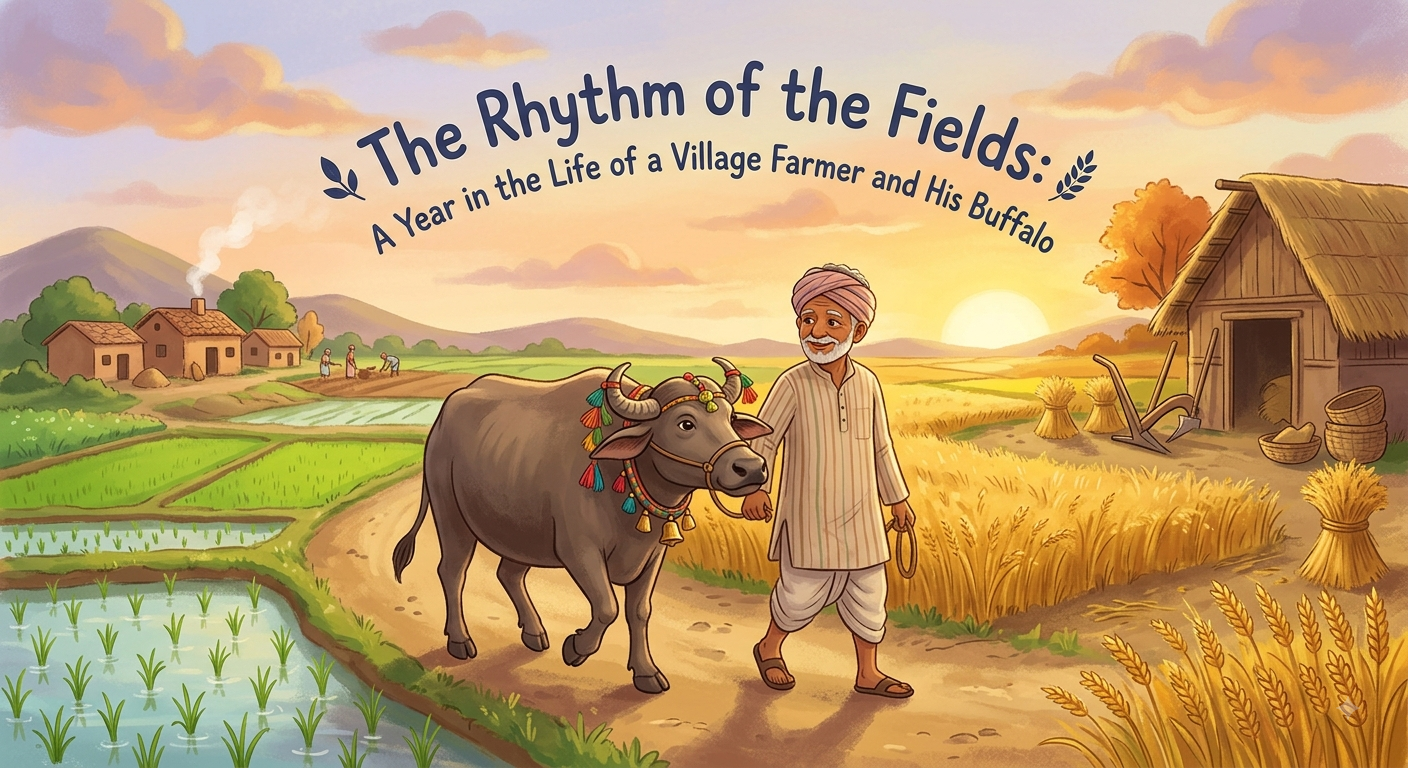
The Rhythm of the Fields: A Year in the Life of a Village Farmer and His Buffalo
An inside look at the daily dedication, gestation journey, milk production, and economic reality of small-scale village dairy farming.
Introduction: Life in the Heart of the Village
Life in the countryside moves at a pace dictated not by ticking clocks, but by the rising sun, seasonal crop shifts, and the gentle lowing of livestock. For a smallholder village farmer, daily survival and long-term economic stability rely heavily on a modest set of core assets: a plot of fertile land, a sturdy pair of hands, and, most importantly, a healthy dairy water buffalo.
In rural agricultural ecosystems, a buffalo is far more than farm stock—it is a financial safety net, a daily source of high-fat nutritional milk, and an integral member of the household. This is the detailed story of one village farmer, his prize buffalo, her transformative journey from pregnancy to birth, and the true economic value of a full year’s hard labor.
Part 1: The Pregnancy and Gestation Journey
When Did the Buffalo Become Pregnant?
In the quiet weeks following the autumn harvest, late in November, the farmer noticed subtle behavioral changes in his water buffalo. Her appetite increased, her temperament softened, and her daily milk output gradually began to taper off. A local veterinary check confirmed what the farmer had hoped for: the buffalo had successfully conceived.
How Long Did She Remain Pregnant?
Unlike domestic cows, which carry their calves for roughly 9 months (280 days), water buffalo have a significantly longer gestation period:
- Average Gestation Period: 10 to 10.5 months (typically 310 to 325 days).
Throughout this extended period, the farmer took exceptional care of her. During the final trimester, as her belly expanded, he reduced her workload, provided extra dry fodder, and ensured she had daily access to local water ponds to stay cool during hot afternoons.
Buffalo Gestation Timeline:
- November 15: Successful Conception
- Dec – March: First Trimester (Normal feed & grazing)
- April – July: Second Trimester (Increased feed & water cooling)
- Aug – Sept: Final Trimester (Drying off milk, high-protein feed)
- September 25: Successful Birth (Gestation ~314 Days)
Part 2: The Birth and the New Arrival
Where Was the Calf Born?
As her time neared in late September, the buffalo became restless. Following traditional village practices, the farmer moved her to a shaded, clean enclosure in the eastern neighborhood barn (East Mohalla), where experienced village elders and a local vet were nearby to assist if complications arose. On a quiet evening, surrounded by soft straw, the buffalo gave birth safely.
Was It a Boy or a Girl?
The new arrival was a healthy female calf (a heifer). In dairy farming, a female calf is considered a double blessing. While male calves are often kept for heavy field work or later sold, a female calf represents the future of the farm's milk production and guarantees long-term economic security for the family.
Part 3: Growth and Feed Over the Next Year
How Old Will the Calf Be Next Year?
Fast-forward exactly one year from her birth: the young female calf will be 12 months (1 year) old. By this age, she is fully weaned, grazing confidently on green pasture alongside her mother, and rapidly approaching full adolescence.
What Food Did the Buffalo Eat to Support Milk Production?
To keep a lactating buffalo healthy and capable of producing rich milk, a farmer cannot rely on grass alone. Her daily diet over the course of the year consisted of a carefully balanced mixture of local fodder and nutritional concentrates:
- Green Fodder (30–40 kg/day): Freshly cut clover (berseem), sorghum, maize, and natural pasture grass.
- Dry Fodder (8–10 kg/day): Wheat straw (bhoosa) or rice straw to provide crucial roughage and digestion balance.
- Concentrate Cake (2–3 kg/day): Cottonseed cake, mustard cake, and crushed grain husks soaked in water.
- Minerals & Salt: Regular mineral mixtures and salt licks to maintain bone health and hydration.
Part 4: Daily Milk Production & Routine
Water buffalo milk is renowned for its high fat content (typically 7% to 8%), making it ideal for making butter, ghee, and traditional sweets. Following the birth, the mother buffalo entered her peak lactation cycle.
Daily Yield Breakdown:
- Morning Milking (5:00 AM): 6 Liters
- Evening Milking (5:30 PM): 5 Liters
- Total Daily Production: 11 Liters per day
Out of these 11 liters, the farmer sets aside roughly 2 liters daily for the growing calf and household consumption, leaving 9 liters per day to sell to local dairy vendors or village cooperatives.
Part 5: The Economics of Hard Work — A Full Year's Value
Behind every liter of milk lies intense physical labor. A farmer's year is filled with 14-hour workdays: cutting grass under the hot sun, cleaning stalls, feeding, milking, and managing animal health. What does this hard work yield financially over 365 days?
| Category | Amount (USD) |
|---|---|
| GROSS REVENUE | |
| Milk Sales (3,285 Liters @ $0.70/L) | $2,299.50 |
| Added Value (1-Year-Old Female Calf Asset Value) | $450.00 |
| Organic Fertilizer (Manure sold or used on crops) | $150.00 |
| TOTAL GROSS VALUE | $2,899.50 |
| ANNUAL OPERATING COSTS | |
| Dry Fodder, Grain Husks & Feed Cakes | $750.00 |
| Veterinary Care & Vaccinations | $80.00 |
| Equipment & Barn Maintenance | $70.00 |
| TOTAL ANNUAL EXPENSES | $900.00 |
| NET ANNUAL FARMER INCOME | $1,999.50 |
While ~$2,000 USD in net annual profit might seem modest by urban standards, in rural communities this steady cash flow pays for children’s education, healthcare, home repairs, and seeds for crop cycles.
Conclusion
The life cycle of a village buffalo reflects the circular economy of sustainable small-scale farming. From the 10-month wait during pregnancy to the quiet birth in the neighborhood barn, every step requires patience, knowledge, and sweat. A year later, with a thriving 12-month-old female calf in the yard and a consistent yield of 11 liters of fresh milk each day, the farmer’s dedication proves that hard work in the village remains one of society's most honest and vital endeavors.